
The Aerospace Bellows Procurement Checklist - Bellows Systems

The Aerospace Procurement Checklist: AS9100 & NADCAP Compliance in Bellows Manufacturing

In the aerospace industry, the margin for error isn’t just slim—it is non-existent. When a commercial jet is at 35,000 feet or a launch vehicle is exiting the atmosphere, the integrity of every single component is a matter of mission success and human safety.

For procurement professionals and engineers, selecting a manufacturer for aerospace application isn’t just about finding a part that fits a drawing; it’s about finding a partner that understands the gravity of risk mitigation. At Bellows Systems, our commitment to excellence is anchored in two critical pillars: AS9100 Rev D and NADCAP compliance.

Here is your essential procurement checklist for ensuring quality and supply chain reliability in aerospace manufacturing.

1. The Gold Standard: AS9100 Rev D Certification

The necessity of AS9100 Rev D certification cannot be overstated. While ISO 9001 provides a solid baseline for quality management, AS9100 adds layers of rigorous requirements specifically designed for the aerospace and defense sectors.

  • Why it matters: AS9100 Rev D forces a proactive approach to risk. It requires manufacturers to identify potential “what-if” scenarios throughout the production cycle—from material sourcing to final expansion joint testing.
  • The Bellows Systems Advantage: Our AS9100-certified processes ensure that every bellows we produce has a “birth certificate.” We maintain full traceability of materials, ensuring that what you receive is exactly what was engineered for your Aerospace Applications.

2. NADCAP: Mastery of Special Processes

While AS9100 governs quality management, NADCAP (National Aerospace and Defense Contractors Accreditation Program) focuses on the technical execution of “special processes.” In bellows manufacturing, this typically involves:

  • Precision Welding: Ensuring the longitudinal and circumferential welds of thin-gauge alloys meet aerospace standards. Bellows Systems is NADCAP accredited for both longitudinal seam welding (GTAW fusion welding) per AWS D17.1 and resistance seam welding (RSEW) per AWS D17.2. Our in-house metallurgical lab is fully certified to perform pre and post macros sections for RSEW per Class A requirements.
  • Non-Destructive Testing (NDT): Utilizing methods like Fluorescent Penetrant Inspection (FPI) or X-ray to detect microscopic flaws in the bellows membrane.
  • Heat Treating: Managing the grain structure of high-nickel alloys like Inconel® to ensure durability under extreme thermal cycling.

3. Supply Chain Reliability & Material Integrity

Aerospace bellows often operate in extreme environments—handling cryogenic fuels or high-temperature exhaust. Supply chain reliability starts with the raw material. A compliant manufacturer must demonstrate:

  • Conflict-Free Sourcing: Along with our supply chain partners, we source and stock both local and DFARS compliant materials as needed.
  • Counterfeit Part Prevention: Rigorous verification of Mill Test Reports (MTRs) to ensure material chemistry matches the specification exactly.
  • Capacity Planning: The ability to meet lead times without compromising the quality of the special processes mentioned above, specifically regarding Aerospace Industry.

4. Risk Mitigation Through Engineering

Risk mitigation isn’t just about checking boxes; it’s about design. At Bellows Systems, we utilize advanced EJMA (Expansion Joint Manufacturers Association) calculations and Finite Element Analysis (FEA) to predict how a bellows will behave under intense pressure and vibration.

Key Compliance Metric AS9100 Rev D Requirement Bellows Systems Standard
Risk Management Documented risk registers Integrated PFMEA (Process Failure Mode and Effects Analysis)
Traceability Material origin tracking 100% digital traceability from melt to shipment
Product Safety Emphasis on “Critical Items” Specialized handling for thin-wall aerospace components

Conclusion: Building Trust in Every Convolution

Procuring bellows for aerospace applications is a high-stakes responsibility. By prioritizing partners who hold AS9100 Rev D and follow NADCAP guidelines, you aren’t just buying a component; you are investing in a fail-safe system.

At Bellows Systems, our certifications are more than just plaques on the wall—they are the framework of our culture. We invite you to audit our processes and see how our rigorous quality standards can provide the peace of mind your next project demands.
Read More
Bellows Design for Cryogenic Temperature Applications

Bellows Design for Cryogenic Temperature Applications

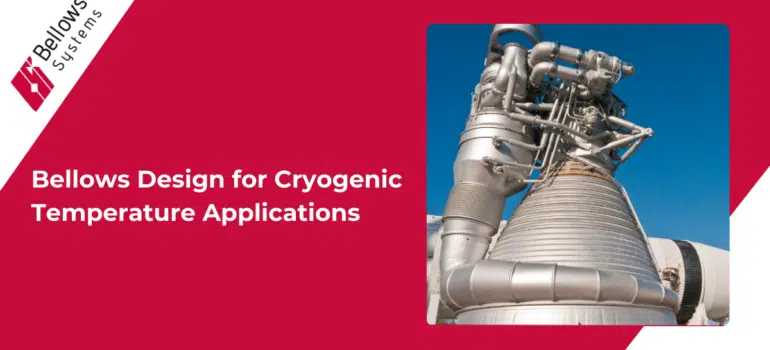
When it comes to cryogenic temperature applications, the design and material selection for bellows become significantly more complex. Below we explore the key differences between bellows designed for cryogenic temperatures and those used in more standard conditions.

Material Selection:

Applications are generally considered “cryogenic” if operating temperatures are below -150°C (-238°F). Therefore, expansion joints must be constructed from materials that can maintain their mechanical properties at such low temperatures. Stainless steel is commonly used due to its ability to retain strength, ductility, and fatigue resistance at cryogenic temperatures. Special alloys such as Inconel or Hastelloy may also be used for their superior performance in extreme conditions, especially when coupled with high-pressure applications and/or corrosive working media.

Design Considerations:

Require additional considerations for absorbing thermal movement of a piping system, as the expansion joints’ surrounding components undergo thermal contraction at cryogenic temperatures. For applications that require minimal heat transfer between the expansion joint and its surroundings, multi-layer insulation is often included as well as special sealing techniques to minimize heat ingress, prevent thermal stress, and maintain the low-temperature environment.

Applications:

These joints are commonly seen in industries dealing with liquefied gases, such as LNG (liquefied natural gas) transport and storage, aerospace, and medical applications involving liquid nitrogen. 

Conclusion:

The design of bellows for cryogenic temperature applications involves specialized materials, advanced design techniques, careful engineering validation, and often rigorous testing to ensure they can withstand extreme conditions. These differences are crucial for maintaining the integrity and safety of systems operating at cryogenic temperatures, highlighting the importance of tailored engineering solutions for such demanding applications.

Read More
Cryogenic Bellows Design for Extreme Temperature Applications

Bellows Design for Cryogenic Temperature Applications

When it comes to cryogenic temperature applications, the design and material selection for bellows become significantly more complex. Below we explore the key differences between bellows designed for cryogenic temperatures and those used in more standard conditions.

Material Selection:

Applications are generally considered “cryogenic” if operating temperatures are below -150°C (-238°F). Therefore, expansion joints must be constructed from materials that can maintain their mechanical properties at such low temperatures. Stainless steel is commonly used due to its ability to retain strength, ductility, and fatigue resistance at cryogenic temperatures. Special alloys such as Inconel or Hastelloy may also be used for their superior performance in extreme conditions, especially when coupled with high-pressure applications and/or corrosive working media.

Design Considerations:

Require additional considerations for absorbing thermal movement of a piping system, as the expansion joints’ surrounding components undergo thermal contraction at cryogenic temperatures. For applications that require minimal heat transfer between the expansion joint and its surroundings, multi-layer insulation is often included as well as special sealing techniques to minimize heat ingress, prevent thermal stress, and maintain the low-temperature environment.

Applications:

These joints are commonly seen in industries dealing with liquefied gases, such as LNG (liquefied natural gas) transport and storage, aerospace, and medical applications involving liquid nitrogen. 

Conclusion:

The design of bellows for cryogenic temperature applications involves specialized materials, advanced design techniques, careful engineering validation, and often rigorous testing to ensure they can withstand extreme conditions. These differences are crucial for maintaining the integrity and safety of systems operating at cryogenic temperatures, highlighting the importance of tailored engineering solutions for such demanding applications.

Read More
Bellows Systems to supply Expansion Joints to Bechtel for NASA’s Mobile Launcher 2 project

Bellows Systems to supply Expansion Joints to Bechtel for NASA’s Mobile Launcher 2 project

Bellows Systems, Inc. has been selected by Bechtel to design and manufacture the Expansion Joints for its Mobile Launcher 2 project. As part of the contract award, Bellows Systems will supply multiple sizes of Metal Expansion Joints which shall be manufactured at its Houston facility. 

Bechtel National Inc. is the prime contractor for NASA’s mobile launcher 2 (ML2) at Kennedy Space Center. Mobile Launcher 2 will be the ground platform structure used to launch the Space Launch System (SLS) Rocket and Orion spacecraft to the Moon. 

Bellows Systems to supply Expansion Joints to Bechtel for NASA’s Mobile Launcher 2 project

Photo Credit:  NASA/David Zeiters

About Bellows Systems

Bellows Systems, Inc. is one of the pioneers of the Expansion Joint industry and a leader in manufacturing a comprehensive line of metal Bellows and Expansion Joints. With over 40 years of experience, Bellows Systems is a trusted partner for major EPCs, Aerospace and Defense companies supplying key components for mission critical applications. Bellows Systems is ISO9001/ AS9100D certified and is a NMSDC recognized Minority Business Enterprise (MBE).   

Read More
Precision Welded Tubing and Tubing Assemblies in Aerospace & Defense

Precision Welded Tubing and Tubing Assemblies in Aerospace & Defense

Precision Welded Tubing and Tubing Assemblies

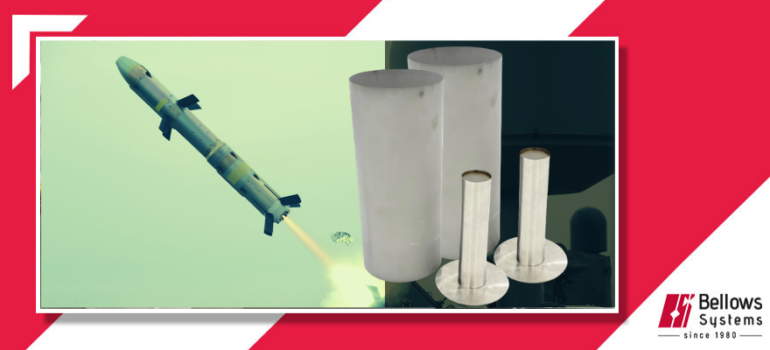
Bellows Systems manufactures precision welded tubing and tubing assemblies for aerospace ducting, Rocket and Missile Components.

Our aerospace qualified welding processes include,

  • AWS D17.1, Specification For Fusion Welding Of Aerospace Applications.
  • AWS D17.2, Specification For Resistance Welding For Aerospace Applications.
  • AMS 2685, Welding, Tungsten Arc, Inert Gas (GTAW Method).
  • Numerous other current and legacy MIL standards
  • Aerospace and Defense customer specifications.
  • How can we help with your precision welded tubing
Read More
DMCA.com Protection Status